.avif)
Why building a Neurodiversity network was the best Impact I made at a company.
In 2022, I joined the biggest company I had ever worked at (500+ people). They had lots of individual teams called squads, and wider networks that brought people together from across the company to discuss topics of interest and raise awareness. There were several networks you could join, but I noticed a gap for Neurodiversity.
In 2017, I was diagnosed with dyslexia and dyspraxia, and instead of feeling relief, it tore away any self-confidence I had. It felt like yet another thing I would have to deal with, and something I didn’t want to share with companies in case they were biased against it. After going to therapy and doing a lot of self-work, I now see it as a bonus. I look at the world differently, and I believe it allows me to be more creative. During that journey, I learned about others who were neurodivergent (Einstein being one of many), what support existed, and how I could help others who were navigating the same thing.
With that in mind, I decided to create the Neurodiversity Network. The focus was on raising awareness around how people think and function within the workplace, and how we could better support each other. As more people joined, something really interesting happened — many started to realise that they might also be neurospicy (ADD, ADHD, dyslexic, autistic). I reached out to several people I had built trust with to help run the network alongside me.
We were given a budget each quarter to use for neurodiversity events and training. I contacted a few companies that specialised in neurodiversity in the workplace, and they trained us on how to be more inclusive, how different people work, and how to bring more autistic people into the workplace (which is still very low).
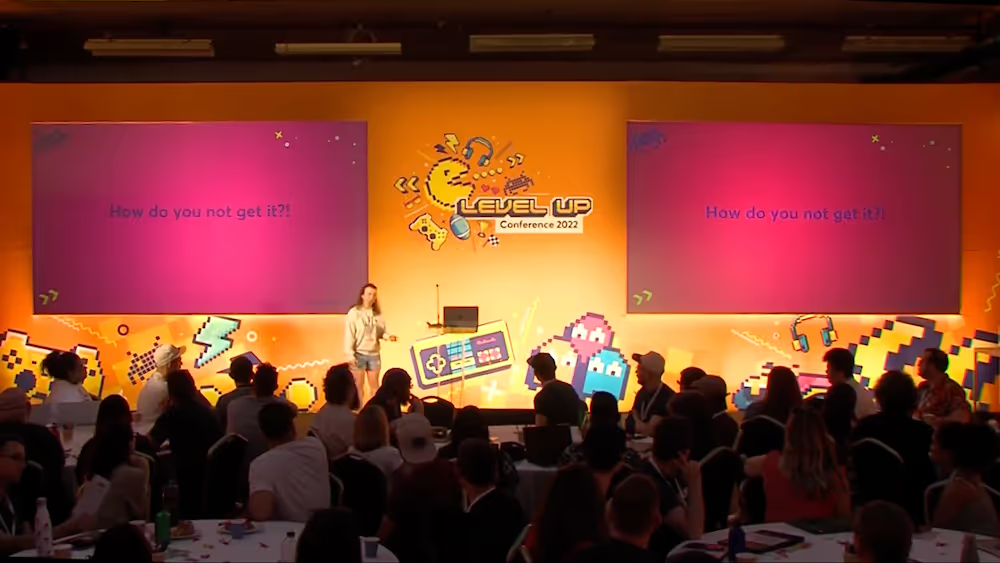
Once a year, the company travels abroad for a conference. The Neurodiversity Network managed to secure a speaking slot on one of the stages, and it turned out to be an extremely popular talk. Myself and other leaders from the network stood on stage and shared our own experiences — how we get through day-to-day life, and how to find support outside of work.
This was one of the scariest things I’ve ever done: standing in front of 100+ people and talking openly about myself and my vulnerabilities. But afterwards, so many people approached me to say how much it resonated with them. They told me it had made them think differently about others, and even question whether they themselves were neurospicy in some way. It led to strong relationships, and I truly felt like people were being seen, appreciated, and understood.
As a website developer, I work on improving how we communicate with others through technology. Creating the Neurodiversity Network helped me improve how we communicate and think with each other as humans. It strengthened my public speaking skills, and taught me how to manage and support a group of individuals while creating events and training for an entire company.
This is something I am incredibly proud of and hold very close to my heart. ❤️